
Artist, weaver, and creator of Middlesbrough’s beloved Teessaurus Park
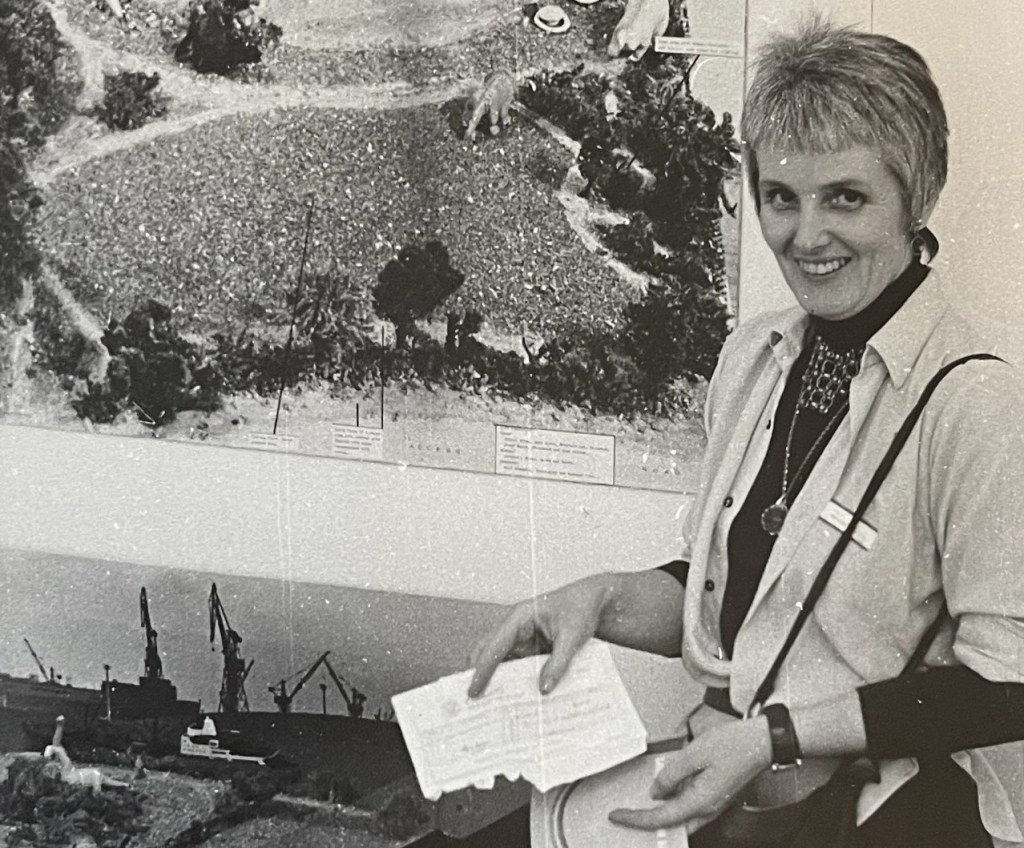
By Daniel Cochran, with help and input from the Glatt Family
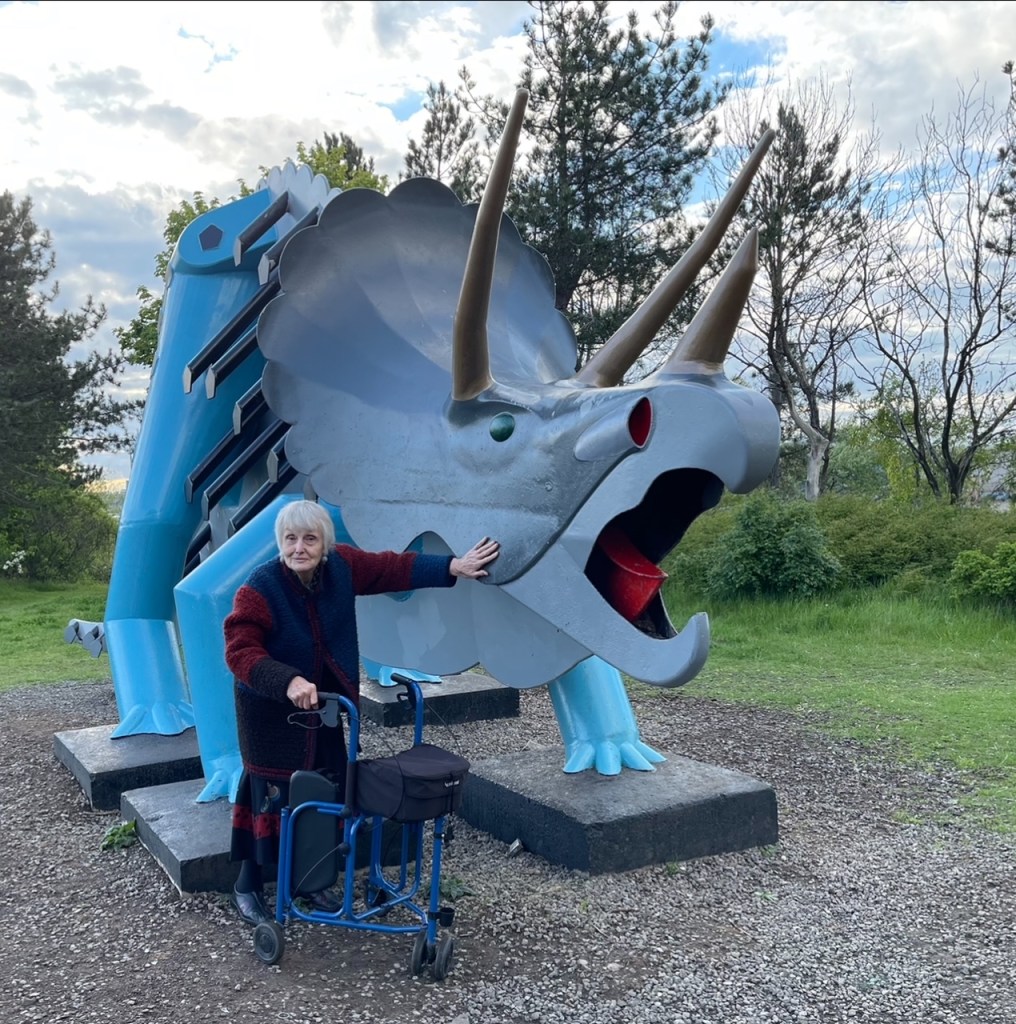
Genevieve Glatt (known to her family and friends as Geni) is an artist who worked in textiles, including weaving and crochet. However, she is best known in one small corner of the world – that of Teesside – for designing a series of sculptures in Middlesbrough’s industrial heart: Teessaurus Park (photo courtesy of the Glatt family).
After many years of searching for information about her, we finally made contact with Genevieve’s children Jude, Ian and Susie in early 2024 and are now able to present a biography of the artist, as well as documents, photos and sketches from her portfolio. The timing is auspicious – the park is currently under threat from a council Draft Local Plan which may cut off parts of the area from the public, or even remove the sculptures from their intended location. Like the Glatt family and the thousands in the local area who have signed a petition, we believe that these sculptures should remain in their intended location within Middlesbrough’s industrial heart.
A Wartime Childhood

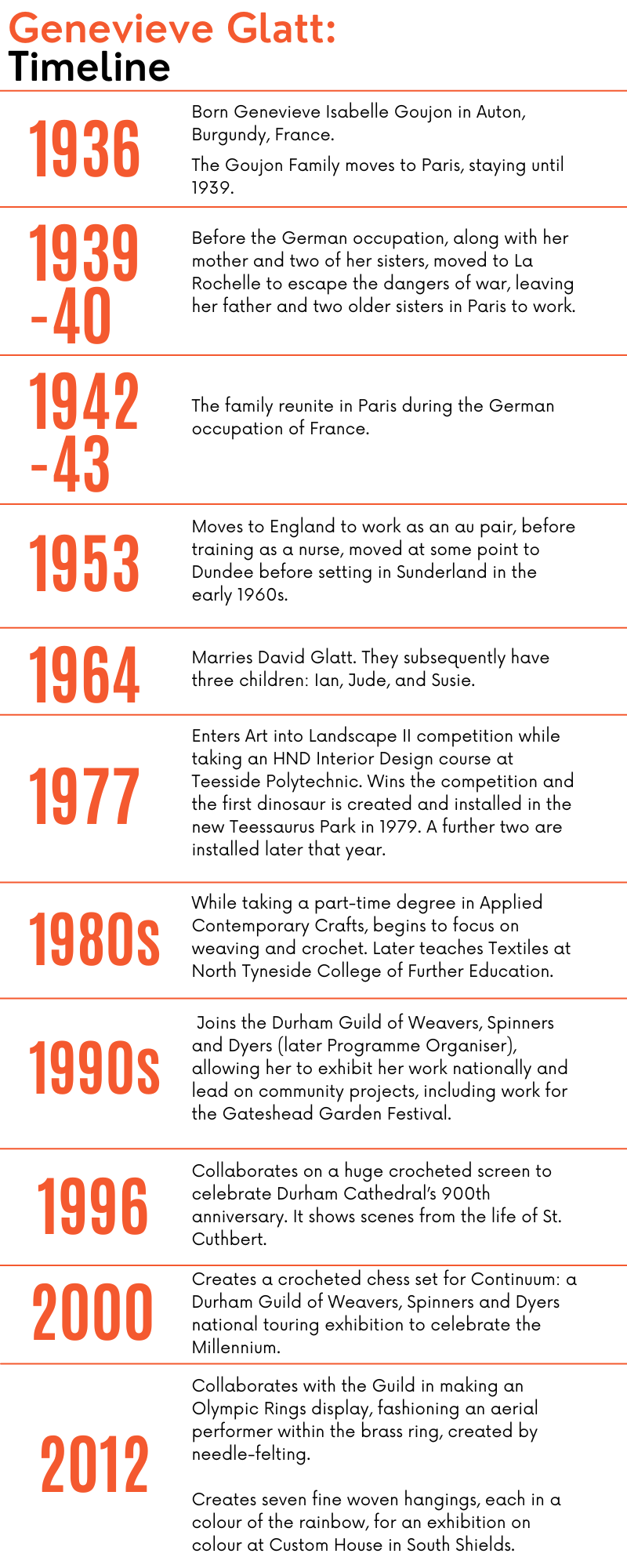
Glatt was born Genevieve Isabelle Goujon in 1936 in Autun, a French city founded in Roman times. She is the youngest of 5 surviving daughters. As the black clouds of World War II gathered around Europe her family moved to Paris, but they were soon divided by the conflict. Geni, her mother, and two of her sisters moved briefly to La Rochelle to escape the dangers of war, leaving her father and two older sisters in Paris to work. When the Nazis invaded, the family were forced to reunite in the French capital, where the young Genevieve would make clothes for her dolls while mending her own out of necessity.

Wanting a better life after the war, Geni decided to move to England to work as an au pair sometime in 1953. Not long after this, a knee injury saw her admitted to hospital and – upon mentioning to a nurse that she wanted to join the profession (and with entry qualifications being somewhat less stringent those days) – she was soon able to get a job in nursing, eventually specialising as a midwife.
It was during this time that Genevieve met a quiet junior doctor named David Glatt at a Halloween party. She was dressed – with typical uniqueness – as a tube of toothpaste, while David (a more retiring sort) was unlikely to have been in costume. Three months later they were married, and Geni retired from nursing with the imminent arrival of her first born, Ian, to become a full-time mother and housewife. Around 1970, a few years after David became a GP, the couple bought their dream home.
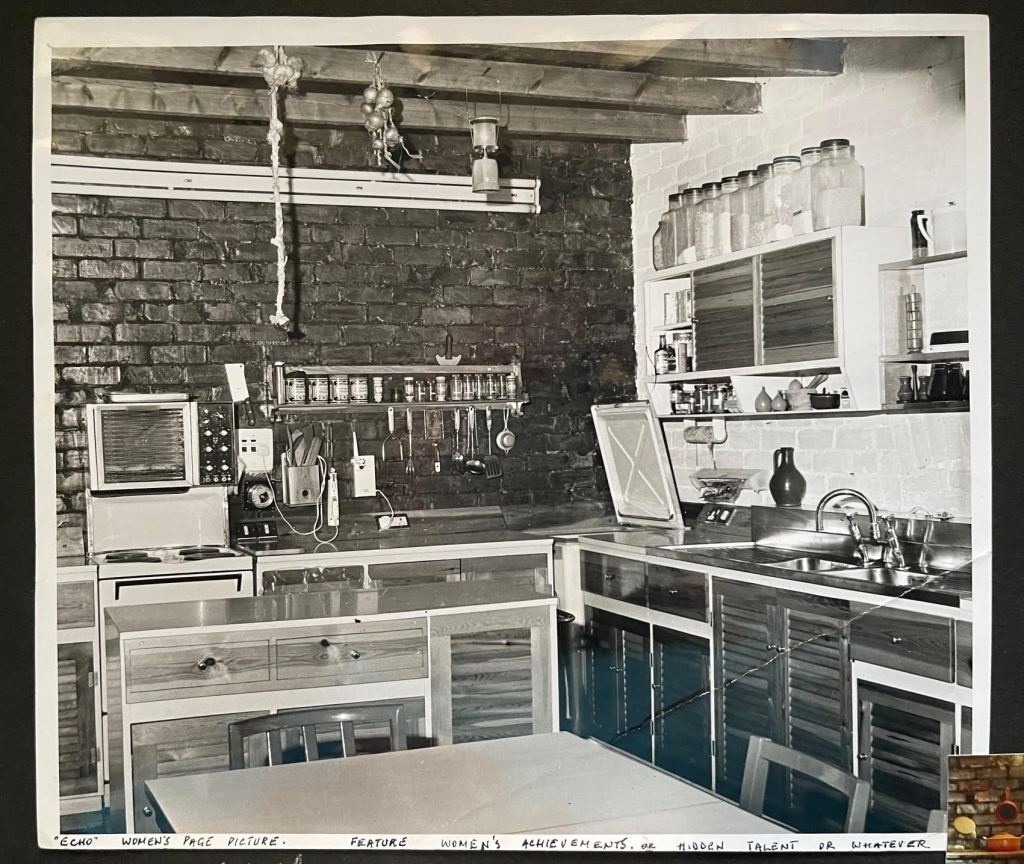
As the house was a bit of a fixer-upper, and Genevieve decided to take a woodworking course in order to do just that. Despite being belittled by her teacher, sniffy of women doing “men’s work”, she completed the course and soon designed and built the entire kitchen for her home1, before going on to renovate the rest of it using timber sold off when Sunderland’s old town hall was knocked down. Both Geni and her kitchen were featured in The Observer newspaper around this time.
This Needs Dinosaurs

(Photo courtesy of Teesside Archives, not to be reproduced without permission).
Buoyed by her success at home, Genevieve decided to take a diploma in Interior Design at Teesside Polytechnic (graduating in ’77). It was here that she first heard about Art Into Landscape – a national competition to transform areas of neglected land which had been offered by local authorities around the UK. Middlesbrough’s nominated site was one of 12 to be selected for the re-design stage of the competition, which was open to anyone – artist or otherwise.
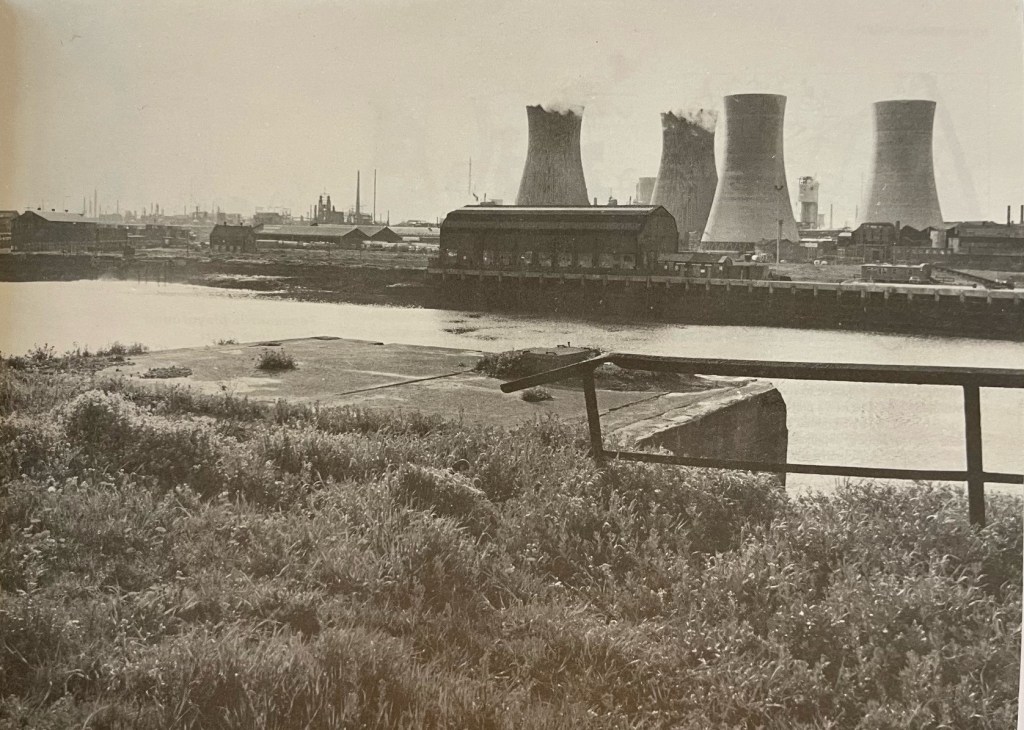
The area in Middlesbrough was identified as the North East Ironmasters Area, next to the Tees. This was essentially a slag heap – the remnants of an industry in decline. When Genevieve visited the area to plan her ideas, her decision was clear: “This needs dinosaurs.” She planned a park full of the gargantuan creatures to be fashioned from steel, and entered the competition. During her time at the potential site for her park, she made a sketch which showed several cranes across the river. Perhaps their long necks evoked the sauropods that were to come (you can read more about Teessaurus in our full archive entry).

To her delight, Geni’s idea was selected as one of the winners of the competition, and she was invited down to the Serpentine Gallery in London for the Art in Landscape exhibition in July 1977.
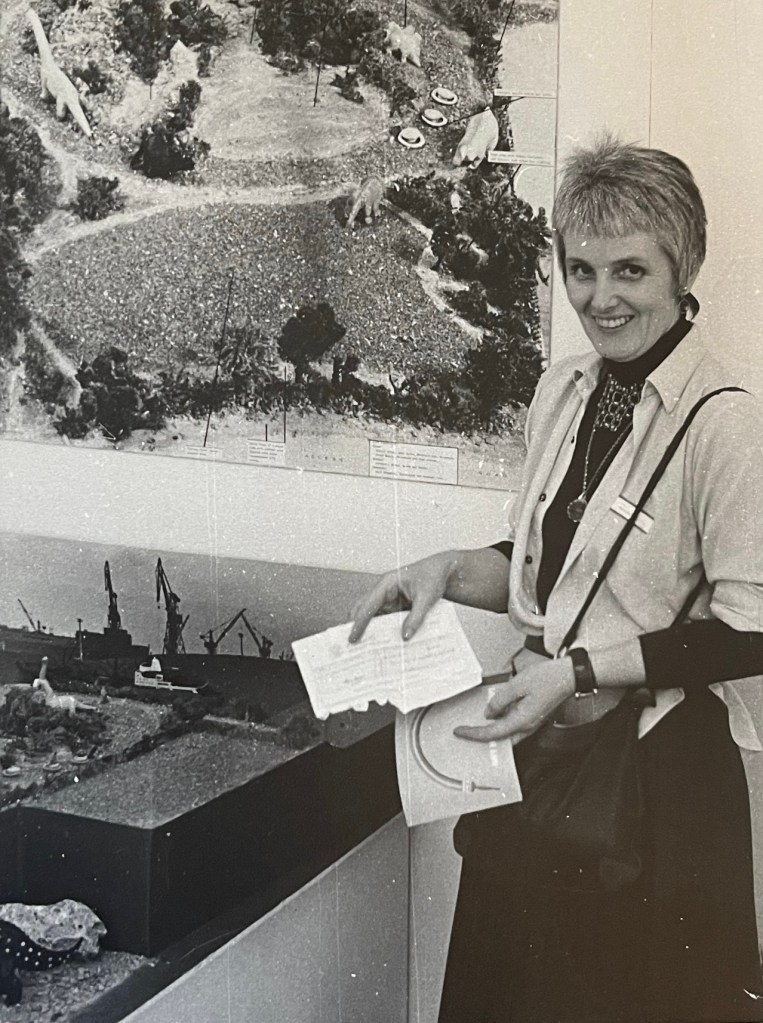
But the hard work was just beginning. With no experience in sculpture, she turned to Whitburn-based architect Ron Farrell for his model-making skills. Together they came up with designs for the dinosaurs, as well as ideas for landscaping the area (working in collaboration with council planners).


Teessaurus under construction at T. Hart and Co., Stockton-on-Tees in 1978/79 (Images from the John Buchan collection courtesy of Teesside Archives, not to be reproduced without permission).
Originally there were plans for at least six custom-made dinosaurs but – as is so often the case – budgeting concerns came into play. In the end three sculptures were originally designed and produced at T. Hart and Co. in Stockton-on-Tees: the original Teessaurus in 1978 and 1979, and its two “babies” later in 1979.2 They were the last full-size sculptures Glatt was to see realised, and remained an anomaly in her portfolio. The scale, material & simplicity of style of Teessaurus set the project apart from what was to follow.
A Move to Weaving
As the 1980s rolled around, Genevieve applied for a part-time degree course in Applied Contemporary Crafts, allowing her a lot more freedom to express herself fully and explore ideas without the constraints of commercial projects. It was the weaving that really excited her and which she chose to explore further for her final year project. She spun and dyed her own yarns before weaving and later crocheting them into arresting artworks.
Eventually, Genevieve joined the Durham Guild of Weavers, Spinners and Dyers, becoming a highly respected member of the group. This afforded her a platform to sell her work at curated art fairs, to exhibit her work nationally, as well as leading on community projects throughout the next few decades.

Some of the most notable of these works were an oversized crotchet teapot fountain, strewn with 3D flowers, which poured water into a matching teacup for the ‘Gateshead Garden Festival’; as well as a finely crocheted and beaded chess set with woven “board” exhibited at the Guild’s national exhibition. In 1996 she collaborated on a huge crocheted piece in Durham Cathedral, celebrating St. Cuthbert and the building’s 900th anniversary (below).


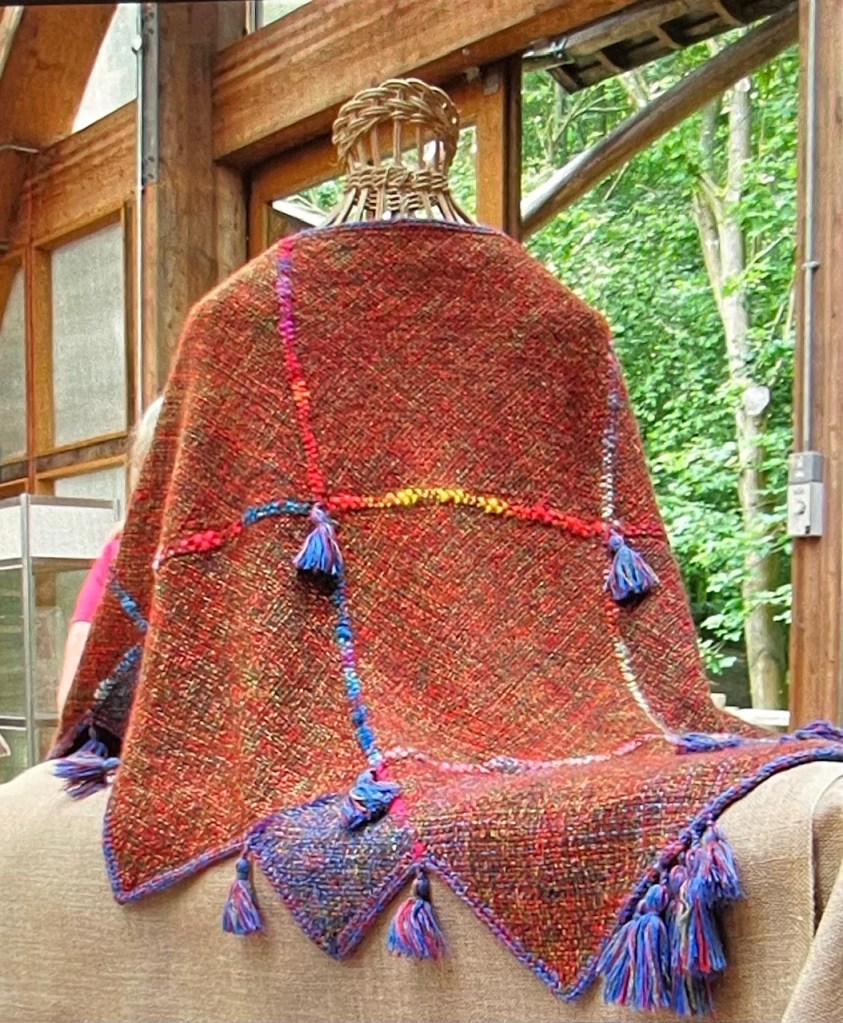
In the 21st century, Geni continued to be active. As the London 2012 Olympics approached, members of Weavers, Spinners and Dyers Guilds around the country were asked to create a piece of work using a brass ring of around 6” diameter, to represent the Olympic rings. Geni’s ring – an aerial performer created by needle-felting – was selected for the touring exhibition. She also made collars, shawls and other laceworks.


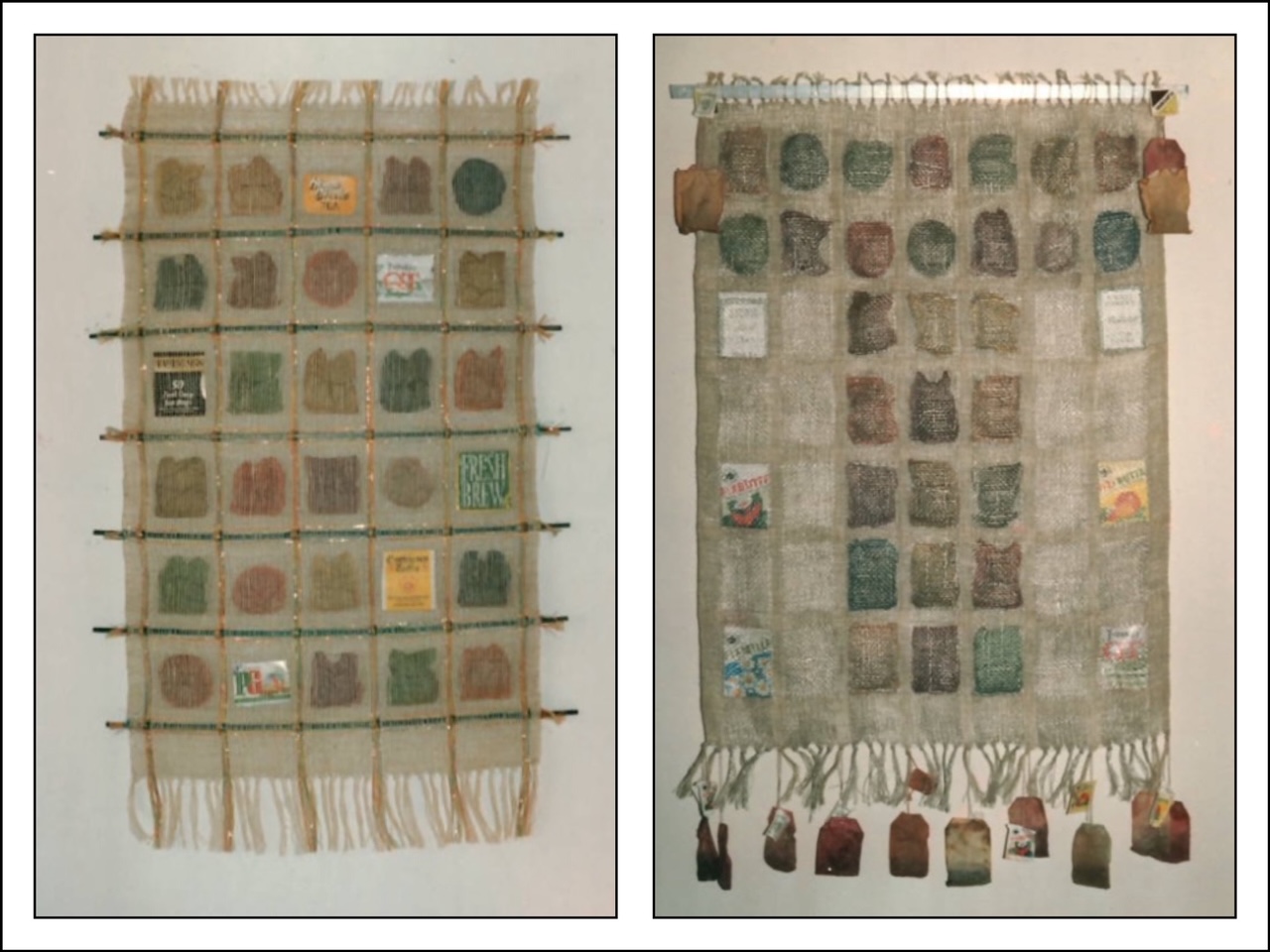

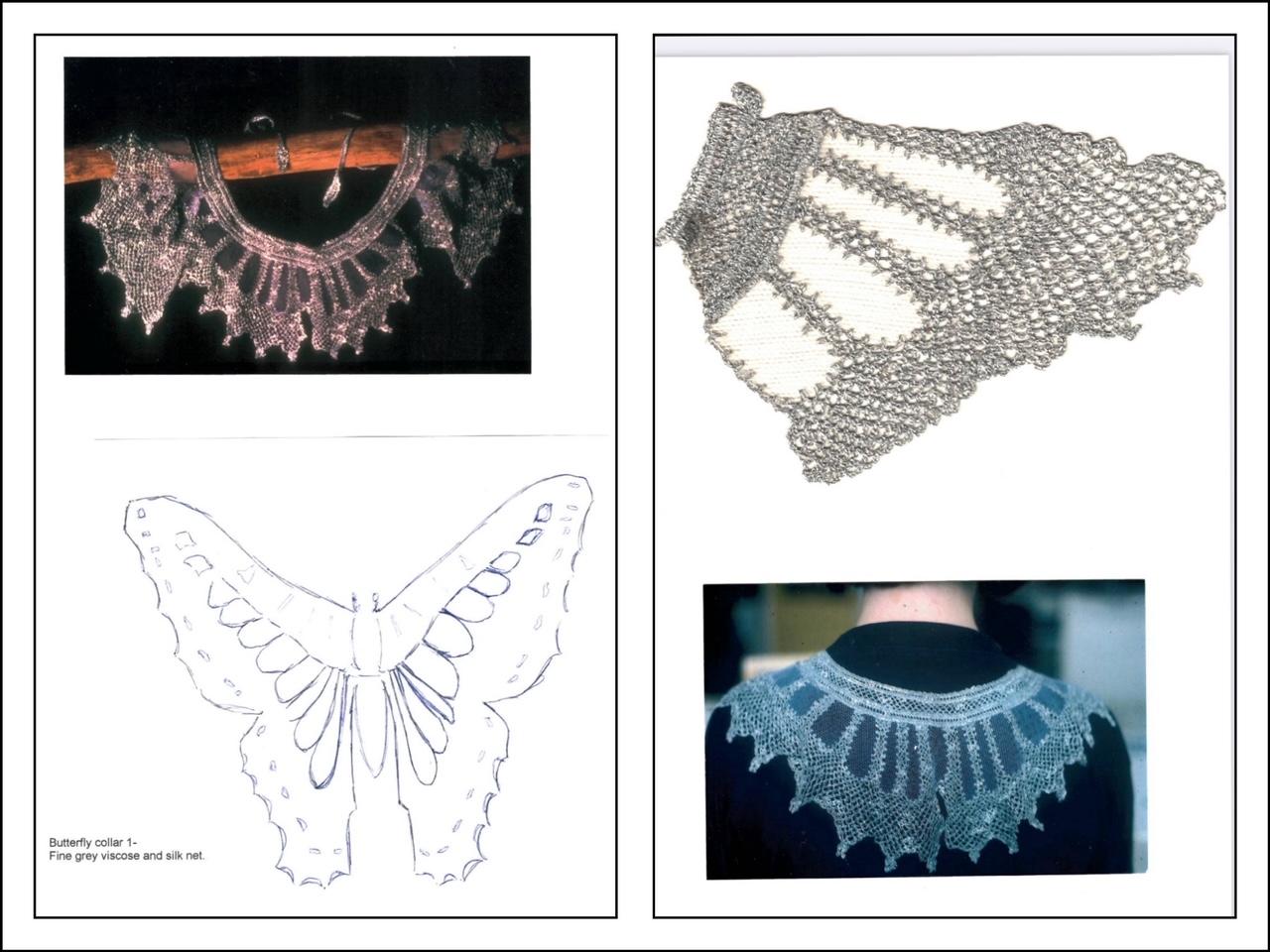
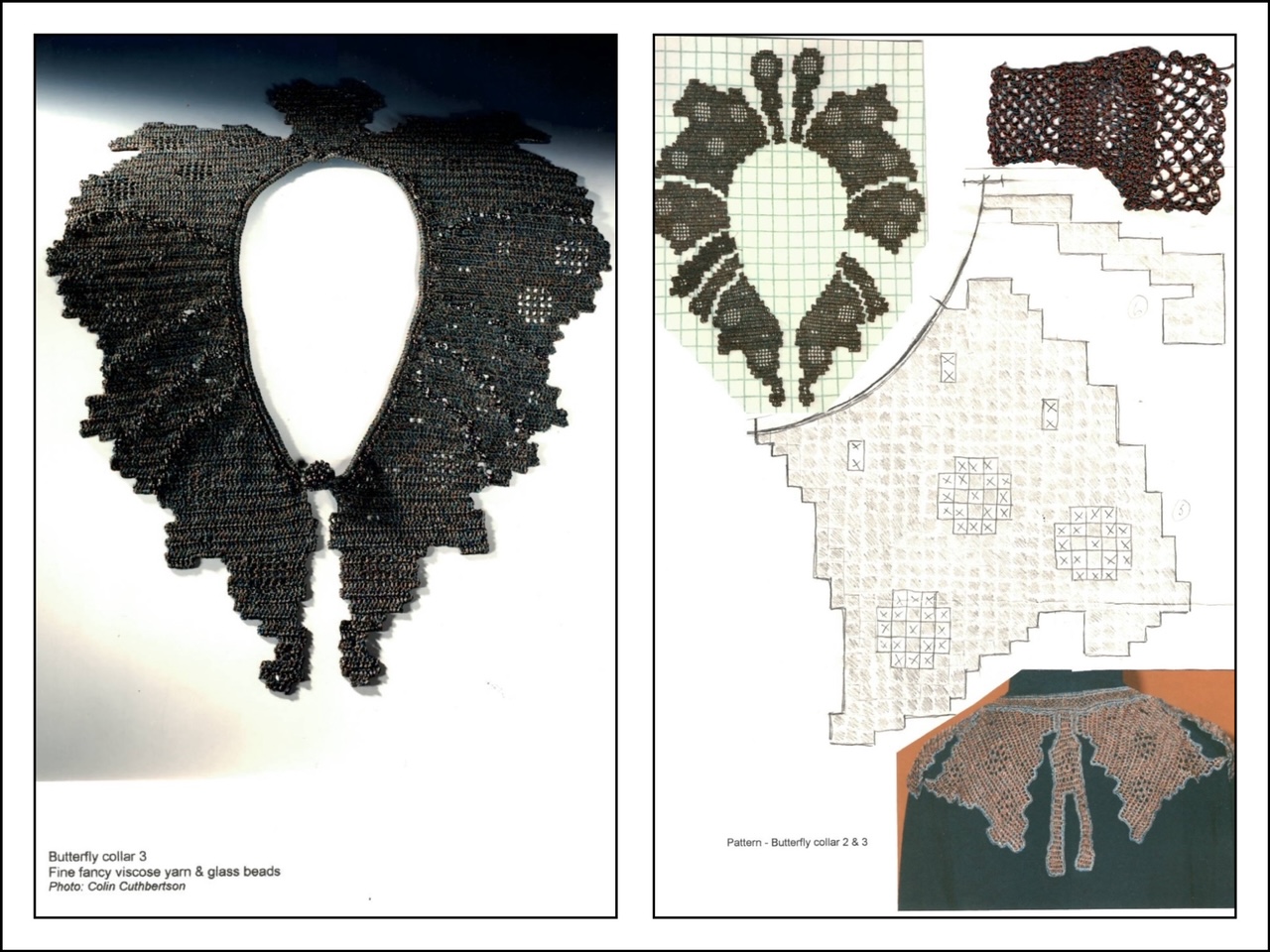
A selection of Geni’s works (courtesy of the Glatt family)
In the same year she created seven fine woven hangings, each in a colour of the rainbow, for an exhibition on colour at Custom House in South Shields. She was also a skilled watercolourist, taking up painting later in her life and creating works in her idiosyncratic, detailed style.
A Life Outside Steel
While many in Teesside may think of Genevieve Glatt in terms of Teessaurus Park, this work was a beautiful anomaly for her. Her journey as an artist and maker took in many forms and crafts, and it’s perhaps because her life has not been documented before that the idea of a mysterious artist – creating one giant work and then disappearing – has arisen.
We can now see that Glatt was always creating, always making, always involved with the world of arts and crafts, and can better place her in context.
Teessaurus Park remains a source of pride to Geni, and of joy that people still visit and care for it. She was delighted to see that Community Champions Middlesbrough had repainted the dinosaurs and was even able to visit a few years back, even chatting to a young family she met there who were amazed to meet the creator of the park.


Her imagination knew no bounds, and her ideas always unique and meticulously planned, often with a huge amount of detail and twists on the conventional. She took joy, not by earning from her skills, but to see the joy her art gave to others: from people seeing, wearing, feeling, playing with – and simply enjoying her creations.
Footnotes
- In a parallel instance of sexism years later, the headmaster of her daughter Jude wanted to stop girls at his school from doing wood and metalwork, Genevieve paid him a visit to explain her views on the matter. Jude was allowed to take the courses. ↩︎
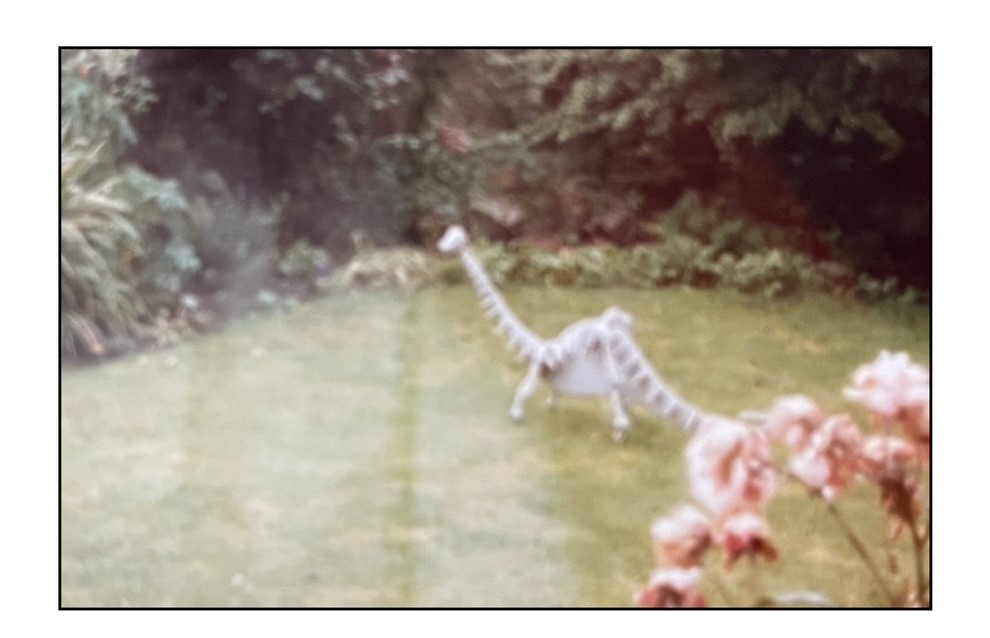
- The later dinosaurs that can be found in the park were likely produced from prefabricated kits in order to save money. Genevieve is not thought to have been involved in their design, although she did submit designs that seem not to have been used. She did, however, have a 1 metre tall scale model of a planned Brontosaurus named Fred in her garden until it was stolen (see below). ↩︎
 North East Statues
One thought on “Giant Steps: The Life of Genevieve Glatt”