
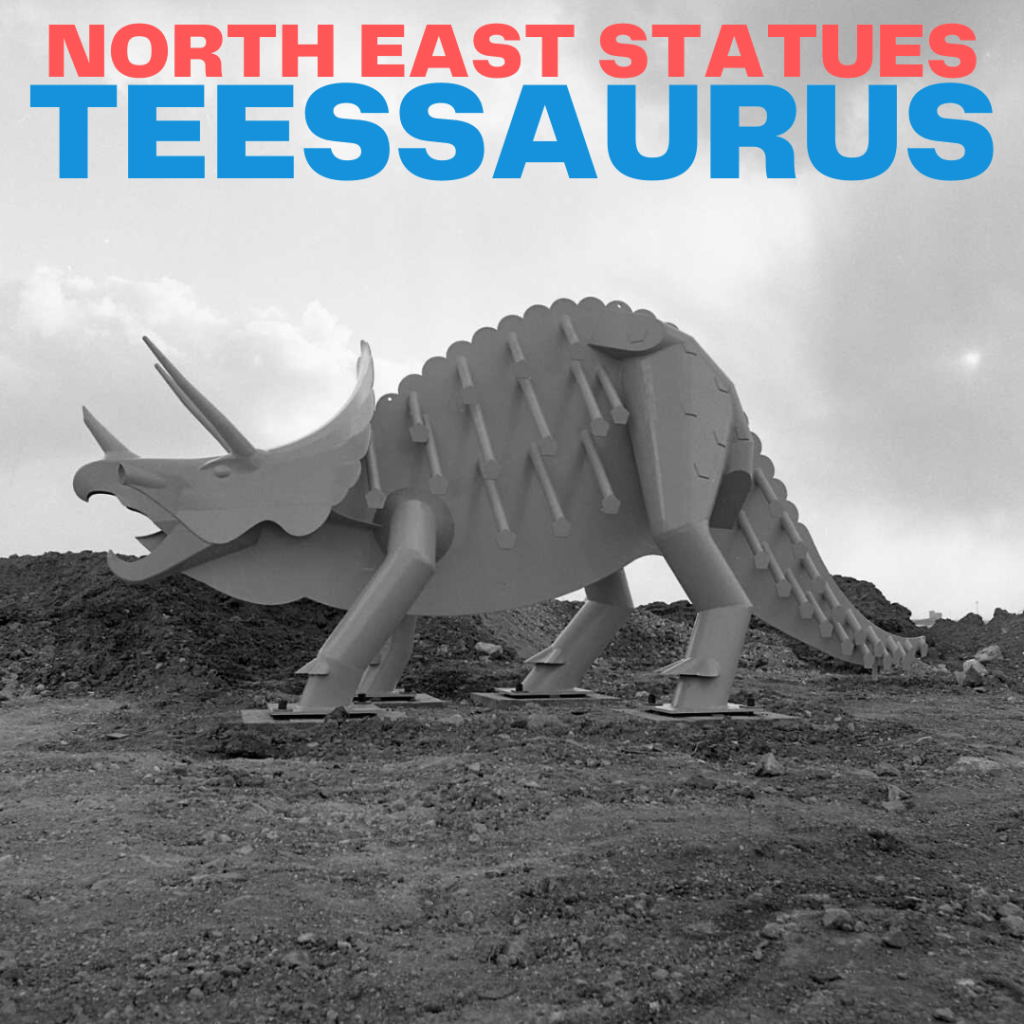
Status: Threatened (See end of article)
By Karis Richardson and Daniel Cochran
For information about the creator of Teessaurus, you can read our article Giant Steps: The Life of Genevieve Glatt.
The iconic and much-loved Teessaurus has been an outlier and an oddity on a slag heap by the banks of the River Tees for over 40 years, by turns forgotten and neglected, then rediscovered and revamped by generations of Middlesbrough locals.
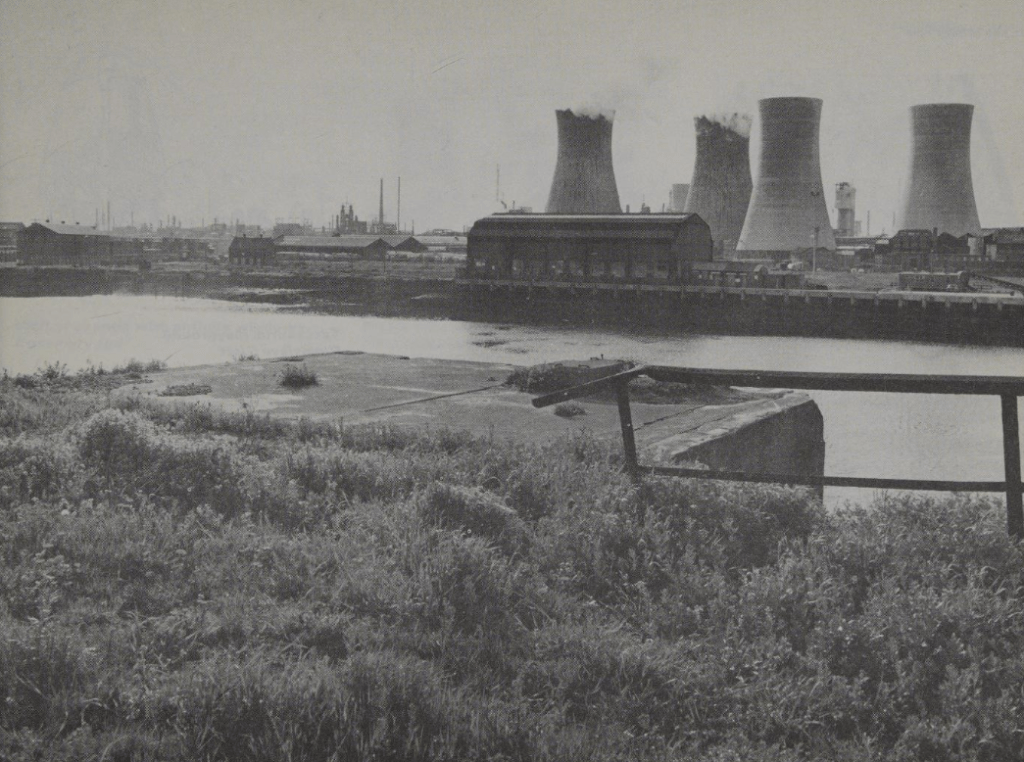
“The history of the site is intriguing. Originally at the heart of Middlesbrough’s Ironmasters’ District, it was formerly occupied by Acklam Iron and Steel Works (Stevenson, Jacques and Co). The impetus to develop the site as a park was generated by a national ‘Art in to Landscape’ competition, organised by the Sunday Times and the Arts Council in the hope that it would attract more investment to what had once been at the heart of British iron and steel making. It opened in 1979 with the original sculptures designed by Genevieve Glatt and arranged on the summit of a re-landscaped mound of slag.”
Walking with Dinosaurs, Chris Corbett, Teesside Archives.
Teessaurus Playground
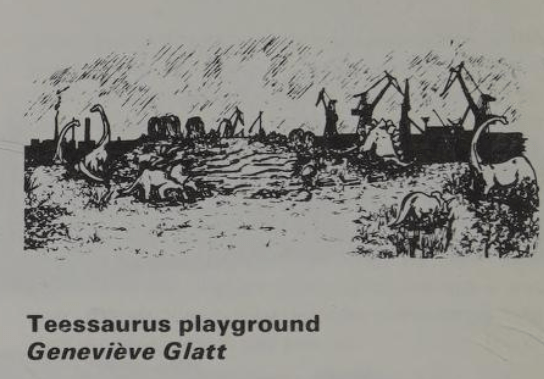
Art into Landscape was a trio of open competitions for people to suggest ways in which under-used public spaces could be enlivened to benefit the community. The second in 1977 was part of the Art Council’s contribution to the Silver Jubilee celebrations. 12 sites were chosen across the country, from those offered by local authorities. Ideas were submitted under four categories: professionals, the general public, children, and school groups. From a short list of 11, Genevieve Glatt’s was chosen for the “North East Iron Masters Area”, a mile to the north-west of the town centre of Middlesbrough. The Ironmasters district is the site of the original ironworks founded in Middlesbrough in the Nineteenth Century, but as the industry moved downstream, the area had become used and derelict.
Glatt’s original proposal was for Teessaurus Playground, a space for children to play, and to feel like you are in a little piece of the countryside, although surrounded by the remnants of industry. For the proposal Glatt wrote: “The site needs life – forms sympathetic to the environment but large and powerful enough to compete with surrounding structures. Monsters…? Dinosaurs came to mind“.
The original plan included a Stegosaurus, a 15 meter long Diplodocus, and a 1.5 metre tall Pteranodon positioned on a mound. The strategy was to fabricate and install the dinosaurs in stages, beginning with the stegosaurus.
Here are some photographs of the stegosaurus sculpture’s creation from the John Buchan photo collection (Ref: ACC- 7224) courtesy of the ever-helpful Teesside Archives.
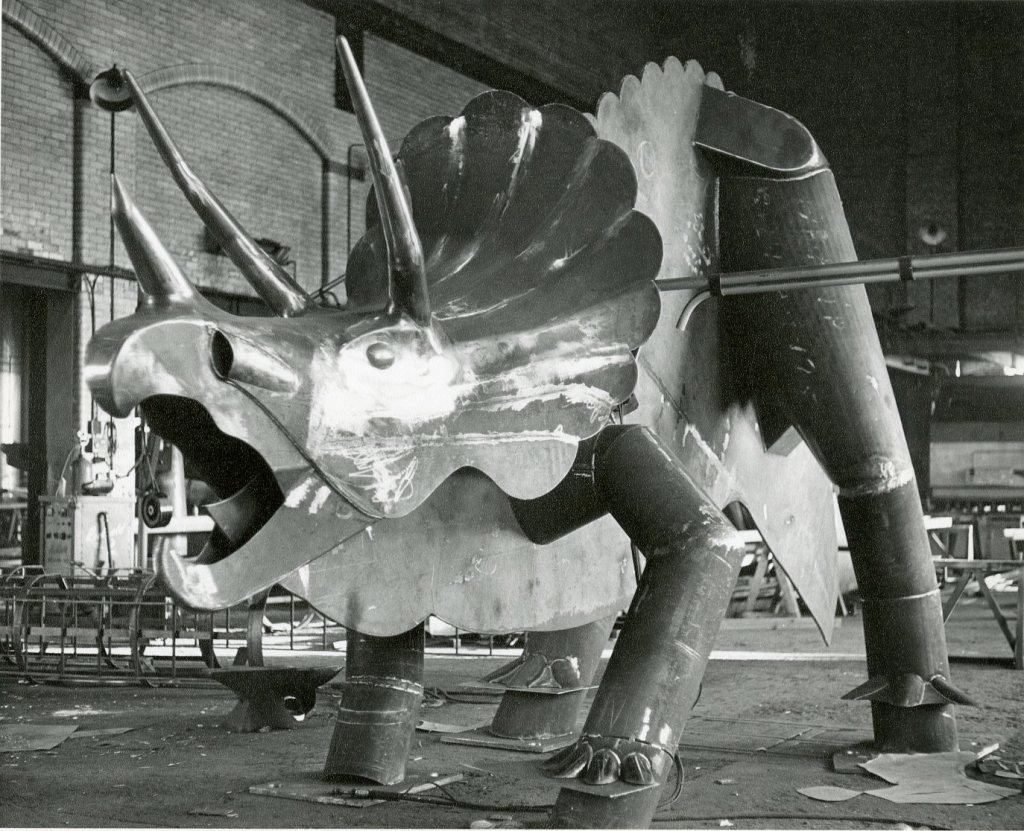
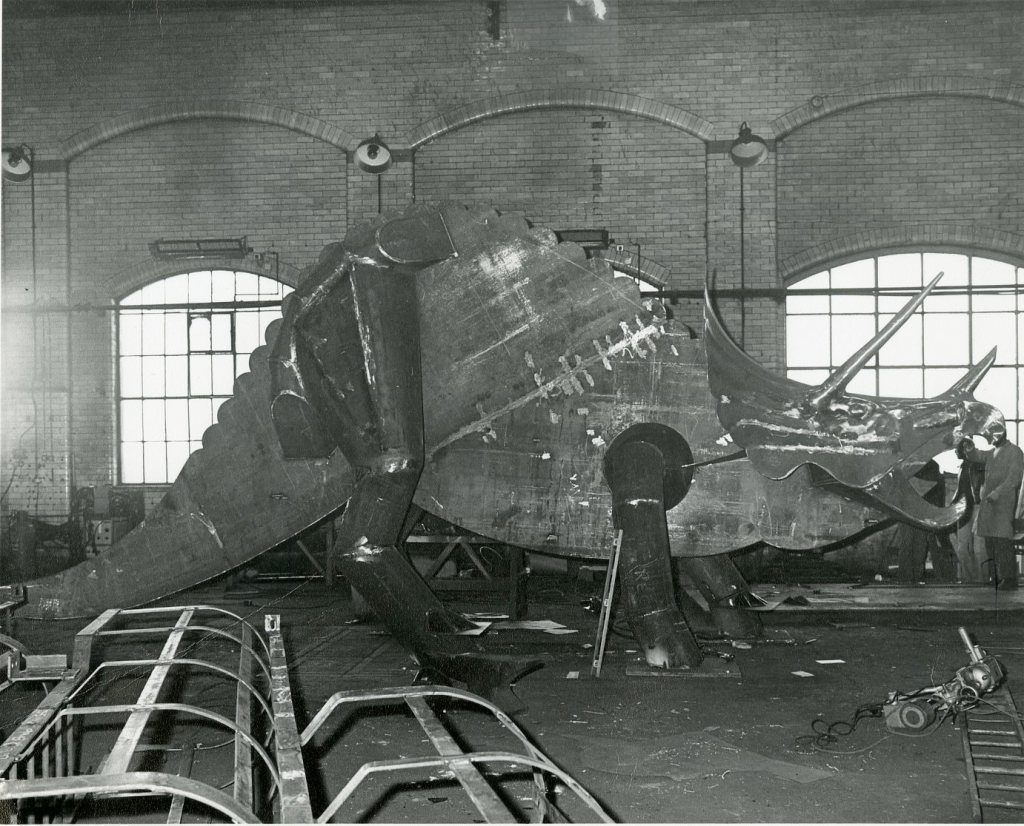
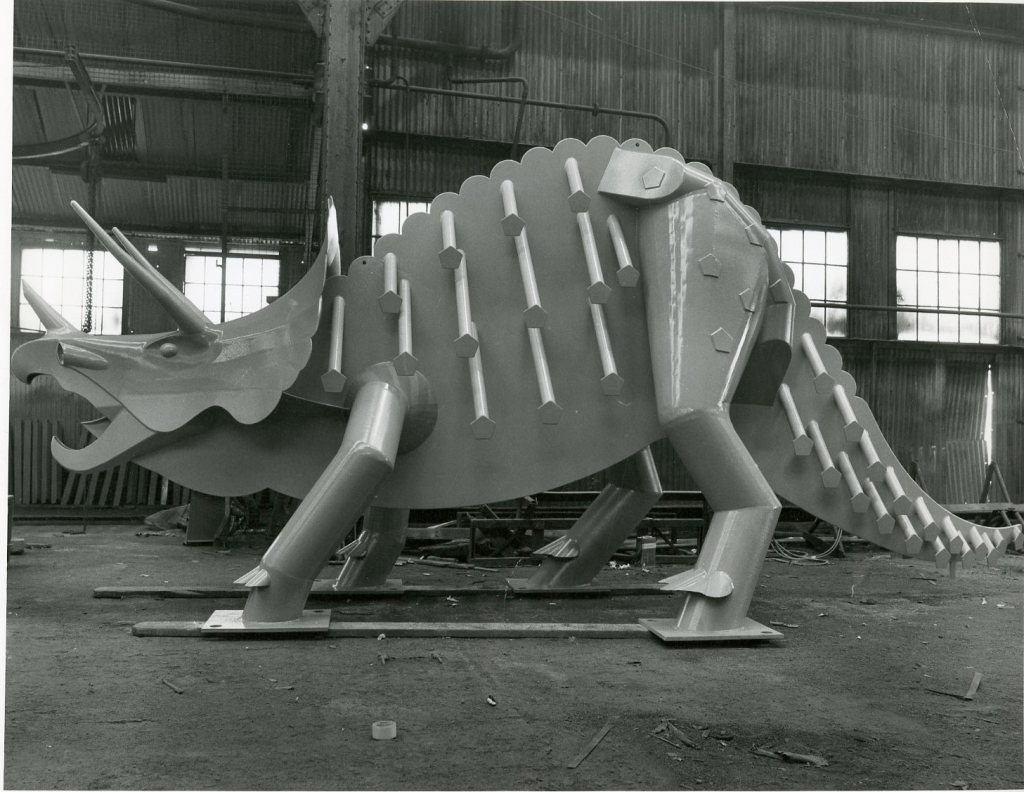
Images from the John Buchan photo collection (Ref: ACC- 7224)
(Photos courtesy of Teesside Archives, not to be reproduced without permission).
These workshop photos from Harts of Stockton are from December 1978 and January 1979 (as ever, if you were involved, please get in touch in the comments or via our email).
The Journey
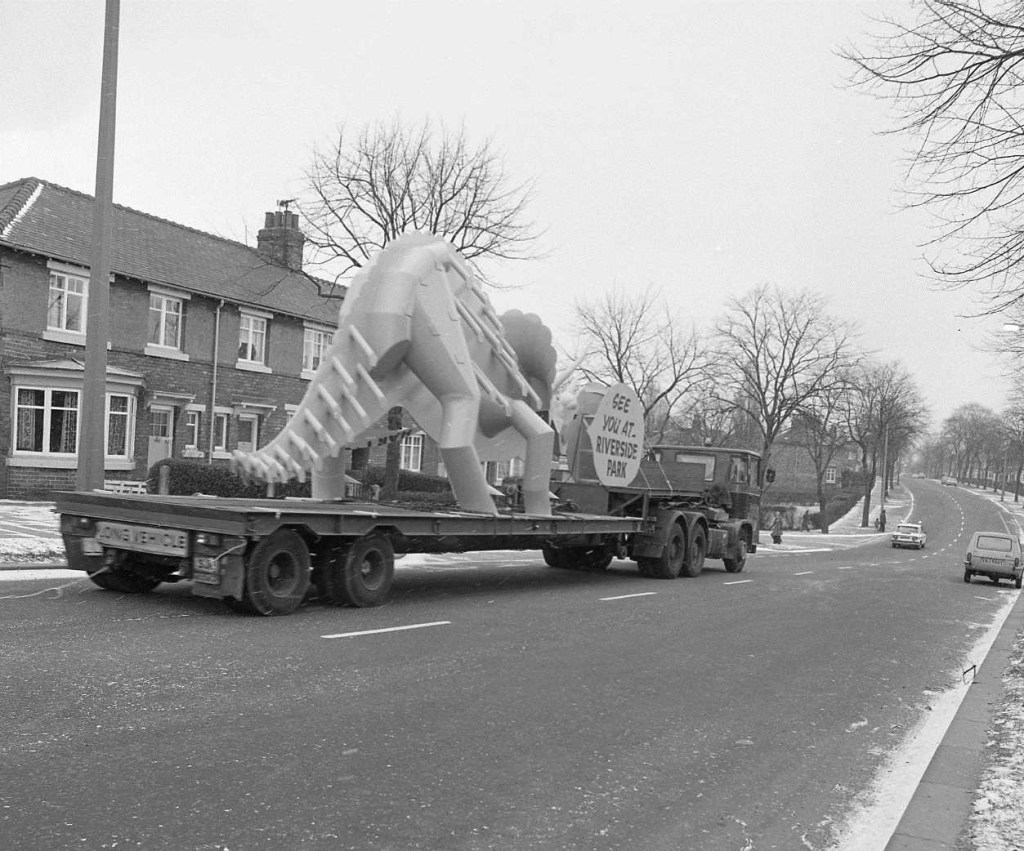
On Valentine’s Day 1979, Teessaurus finally made its way from the workshop to its current home at Riverside Park.
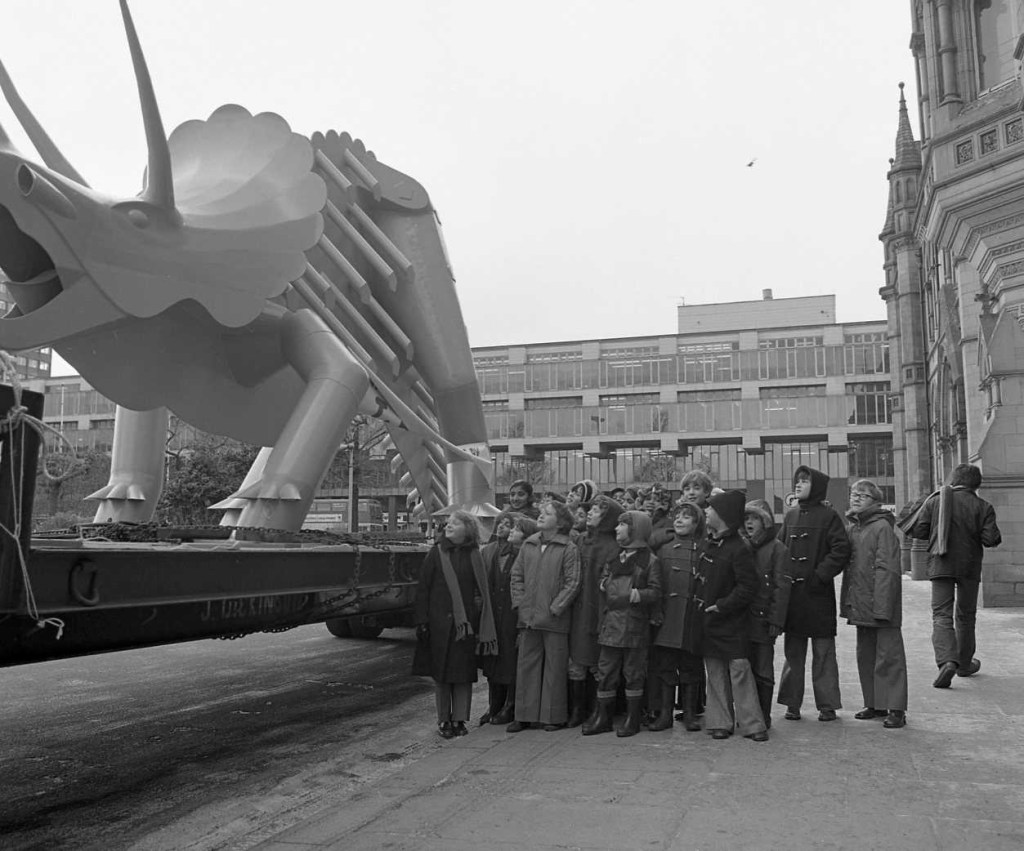
On the journey was a quick stop by the Town Hall, where a group of duffel-coated schoolkids caught a quick glimpse. The sculpture was transported on a flatbed with a speech-bubble sign – “See you at Riverside Park”.
Here’s a photo by John Buchan of some local dignitaries next to the first Teessaurus, at the unveiling in February 1979.

(Photo courtesy of Teesside Archives, not to be reproduced without permission. reference: ACC-7224)
The lack of Genevieve Glatt in the photo is emblematic of a bit of a theme with Middlesbrough’s women sculptors; for such a big work, Glatt is conspicuously absent.
On a more positive note, the long-neglected Teessaurus got a much-needed repaint recently, thanks to the fine folks at Community Champions Middlesbrough.
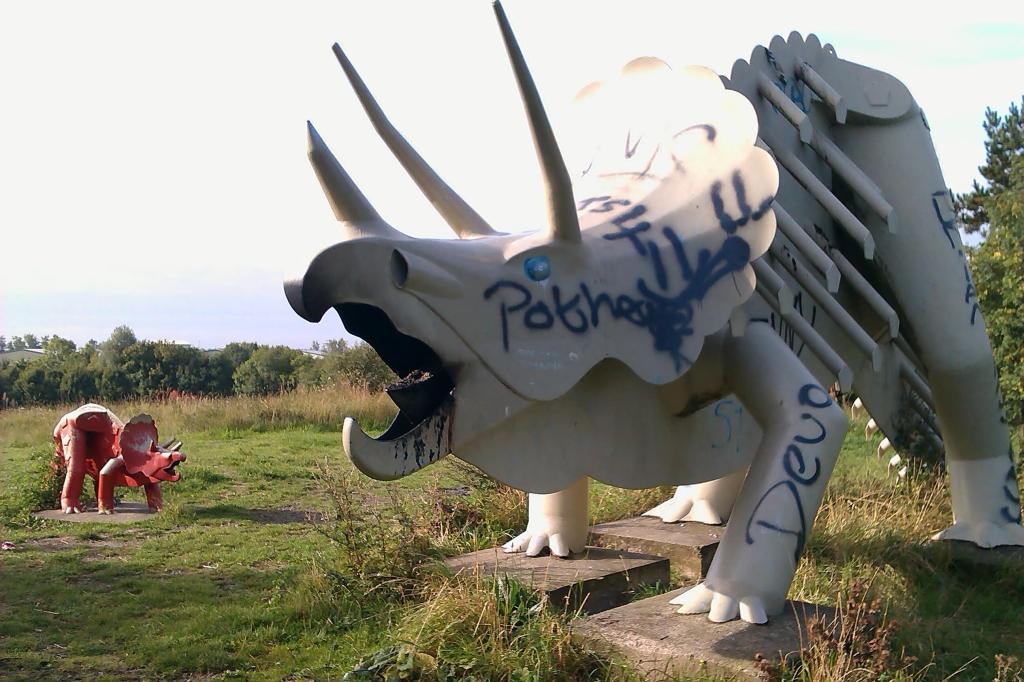
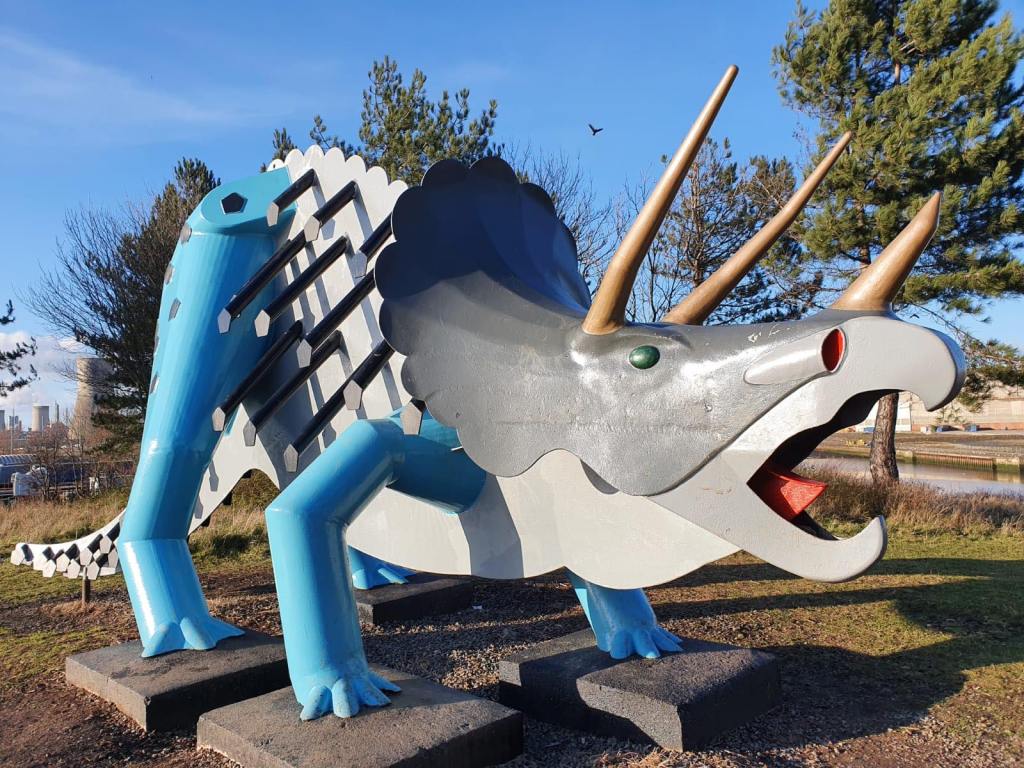
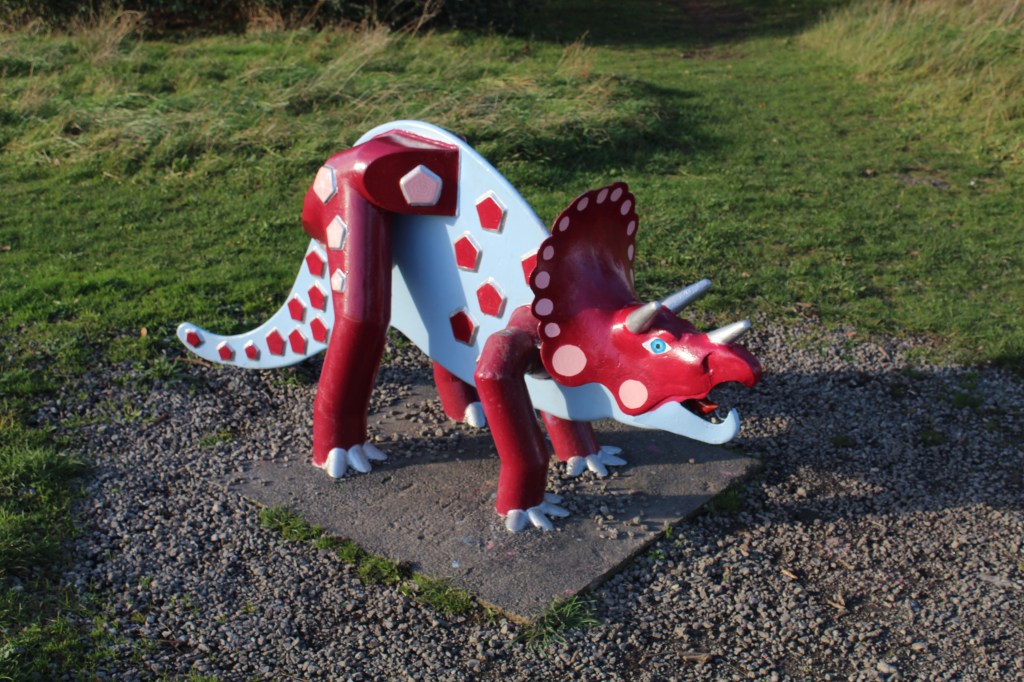
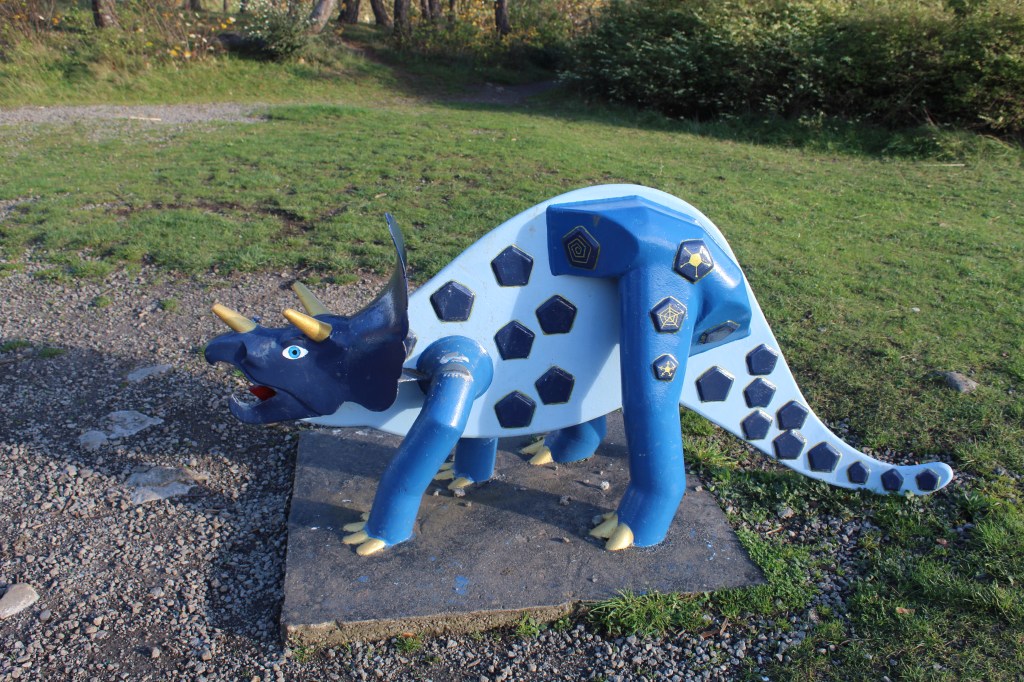
Financial pressures meant that Glatt’s original dinosaur designs did not materialise. However, several other dinosaur sculptures were added to the park from 1987, but these were a kit design which were fabricated in Middlesbrough.
Under Threat
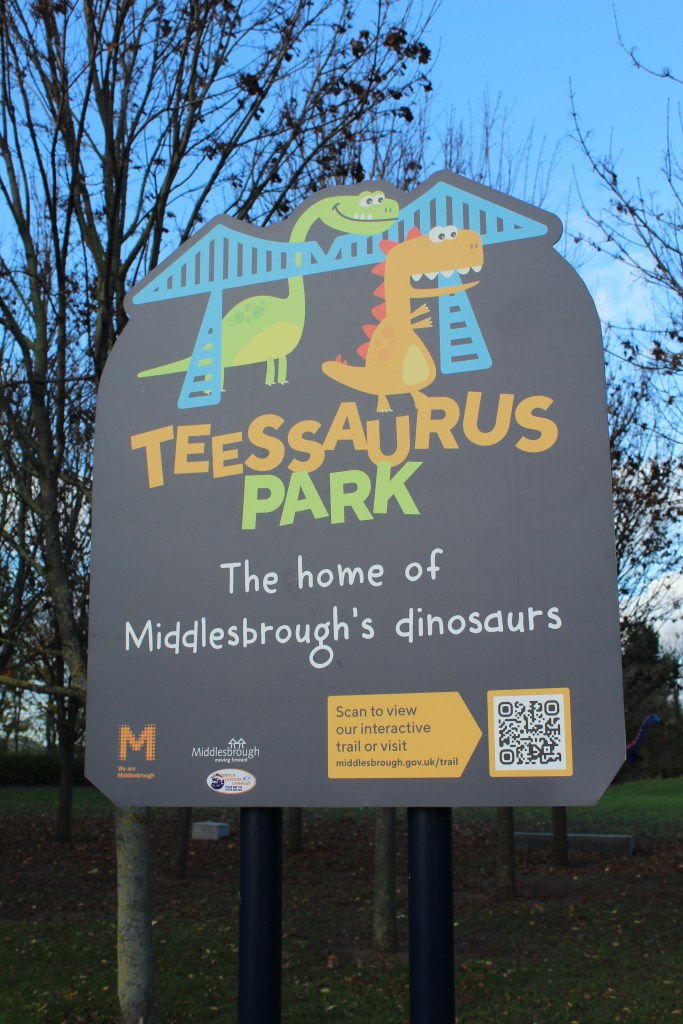
Despite being recognised as a Local Wildlife Site for urban grasslands, and having an interactive trail designed by Huntee Digital Trails & Experiences – as well as plans to install play equipment in the future, Teessaurus Park is under threat.
A draft council plan shows an intent to close off half the park, and possibly to relocate the statues. Given that they were intended to be site-specific, and that they represent the only large-scale sculptures by a woman in Middlesbrough, this seems short-sighted at best and cultural vandalism at worst. We will keep you updates as we know more.
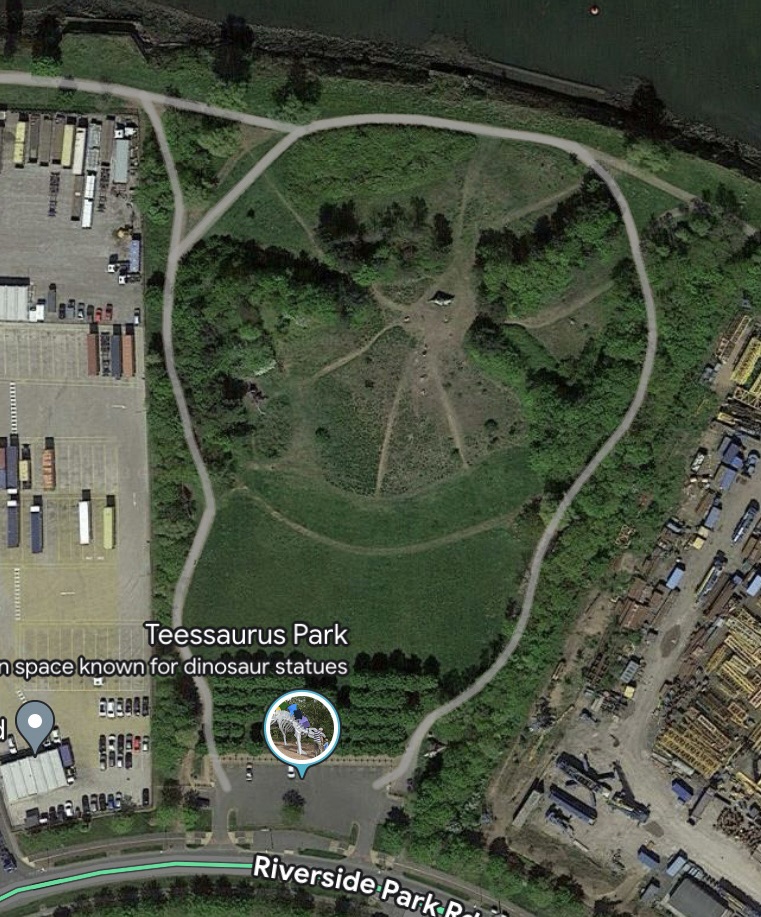
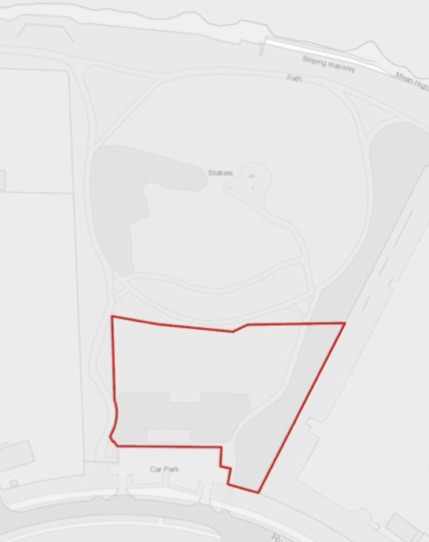
The area of the park threatened with closure
 North East Statues
The individual second left on the photo of the group of men by Triceratops is Geoff Morley who worked for the Borough Engineers Department Middlesbrough Council who project managed the installation .
Sent from my iPhone
LikeLiked by 1 person
Thanks Tony, I’ve added him in.
LikeLike